Sometimes the toughest lessons that hurt the most are the ones we need the most, as is the case with anything cybersecurity related. You donāt want to experience a data breach, regardless of how itās caused, but preventing them is a bit more challenging than you might at first expect. If you want to avoid losing time, money, and reputation needlessly, then take these three cybersecurity lessons into consideration today.
BlackCSI Blog
One of the biggest myths out there related to cybersecurity is that criminals only go after the big enterprises. Why should they care about your small operation, anyway? In reality, cybercriminals love to attack small businesses to take advantage of their weaker security infrastructures. If youāre not careful, this could lead to serious losses for your business stemming from a loss of trust, legal fees, and operational downtime.
Backups are a common subject in IT and in business alike. You can think of them like your spare key or the spare tire, where they are the emergency fix for when you do something silly or something unexpected comes along. But with business, the stakes are higher, and when your companyās data is at risk, a simple backup approachāunlike the spare key or spare tireāis not going to be enough.
Most businesses donāt have what it takes to survive a hardware failure or natural disaster, and we donāt mean in terms of āgrit.ā What we mean is in the sheer technological capacity to recover their data and continue operations. Itās bizarre, too, how easy data backup can be, provided you follow these three key tenets. With a little help from a qualified backup professional, your business can stay resilient even in the worst of times.
The conversation around B2B data security is no longer about having a backup, but about whether your backup actually works when you need it most. Data backup and disaster recovery solutions were once seen as āset it and forget itā tools, but this is no longer the case. In reality, your data backup strategy is much more complex, and if you fail to give it the attention it deserves, it could result in an extinction-level event for your business.
Be honest: Do you have a real plan for the day your server goes dark? We're not talking about a little glitchāwe mean a full, sudden stop due to a failed disk, a nasty strain of ransomware, or an accidental keyboard slip. For too many businesses, the "plan" is just that dusty external drive they plug in at closing time. This isn't a strategy; it's a prayer, and one that will go unheard when you need it most.
That false comfort is your biggest IT blind spot, because if a simple copy-paste job was enough, we wouldn't see businesses vanish after a single data incident. Stop crossing your fingers and let's get you a recovery plan that actually works.
How much data do you think your business stores? How much of that data does your business need to operate? Regardless of your answers to these questions, one thing is for certain: you need to take action to ensure your businessā data is never put in harmās way needlessly. It should be able to survive in the face of great adversity, whether itās from a fire, weather incident, cyberattack, or simple user error.
When it comes to your businessā IT, thereās a nasty word called ādowntimeā thatās always referred to in a negative way, and for good reason. Downtime can be a business killer if itās not monitored for and avoided. To help you understand just how dire downtime can be, we want to compare it to its natural enemy: uptime.
Nowadays, data is one of the most valuable assets we have. However, if weāre being honest, whenever we say ādata,ā what weāre referring to is knowledge. In this context, data has always been something that society has valued.
Consider the Library of Alexandria, widely regarded as the first library to transcend cultural prejudices and collect information from multiple civilizations. Its collection must have been breathtaking, but it isnāt around any longer. All that data, gone.
How likely is it that your business could experience similar data loss, and more critically, how prepared are you for that eventuality?
How much do you know about your businessā data backup infrastructure? Do you know how often data backups occur, or if theyāre occurring at all? Regular backups are the key to a successful, sustained business, and multiple backups per day are your āGet out of jail freeā card when youāre facing a data loss incident.
Backup is a decidedly unsexy topic to discuss, but itās important nonetheless. You canāt trust that your files will always be thereānot unless you take action to ensure theyāre well-protected and preserved for when you need them most. While youāre busy with other parts of running your business, you need to know with certainty that your files are safe, and we can offer that.
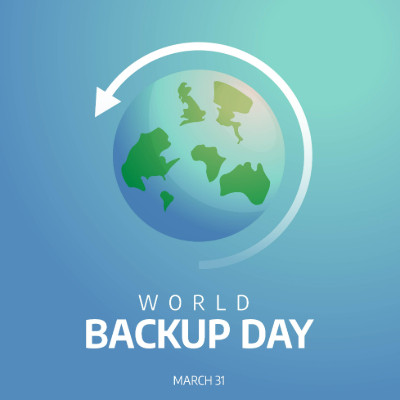
Your business runs on data. You keep customer information, invoices, project files, inventory and much more. If you were to lose it, you face a myriad of problems from hits to your reputation to major downtime. Today is World Backup Day, so we thought it would be good to highlight just how important having a feature-rich and reliable backup strategy is.
Business is all about disaster mitigation and damage control. You never know exactly when something bad is going to happen, but you have to be ready for it when it does. Today, we want to discuss a couple ways that smart technology can help you in specific situations where your business might otherwise falter.
Security is one of the more worrisome parts of running a business, and it doesnāt matter what size your organization is either. Whether youāre a small startup or a large enterprise, security is still going to be paramount. But it doesnāt have to be confusing; in fact, we have three simple strategies you can start implementing today to help you move your security infrastructure in the right direction.
Tape backup used to be the go-to backup solution for businesses, but itās since lost its luster in favor of digital backup solutions. You might still find some uses for it, if you find a good enough excuse. Today, we want to examine why you might still use tape backup, even though a Backup and Disaster Recovery (BDR) solution far outshines it.
Technology has empowered us to achieve more than ever, but with that progress comes increased expectations for everyone. This means greater productivity, and the pressure to perform can be relentless at times, making it crucial to find efficient ways to manage our tasks. Unfortunately, there is a natural limit to how much we can accomplish, and certain challenges can push us to that limit faster. Today, we want to explore two of the most common productivity pitfalls.